When I was pregnant with Lewis, I spent so much time preparing for birth.
As a birth and postpartum doula, childbirth educator, and public health professional, I had spent years helping families prepare for pregnancy, labor, birth, and those first weeks at home. I knew the evidence and recommendations. I knew newborns wake frequently, breastfeeding can be difficult, and postpartum recovery takes time. What I didn't fully realize was that while I was preparing to have a baby, I was also preparing to become a mother.
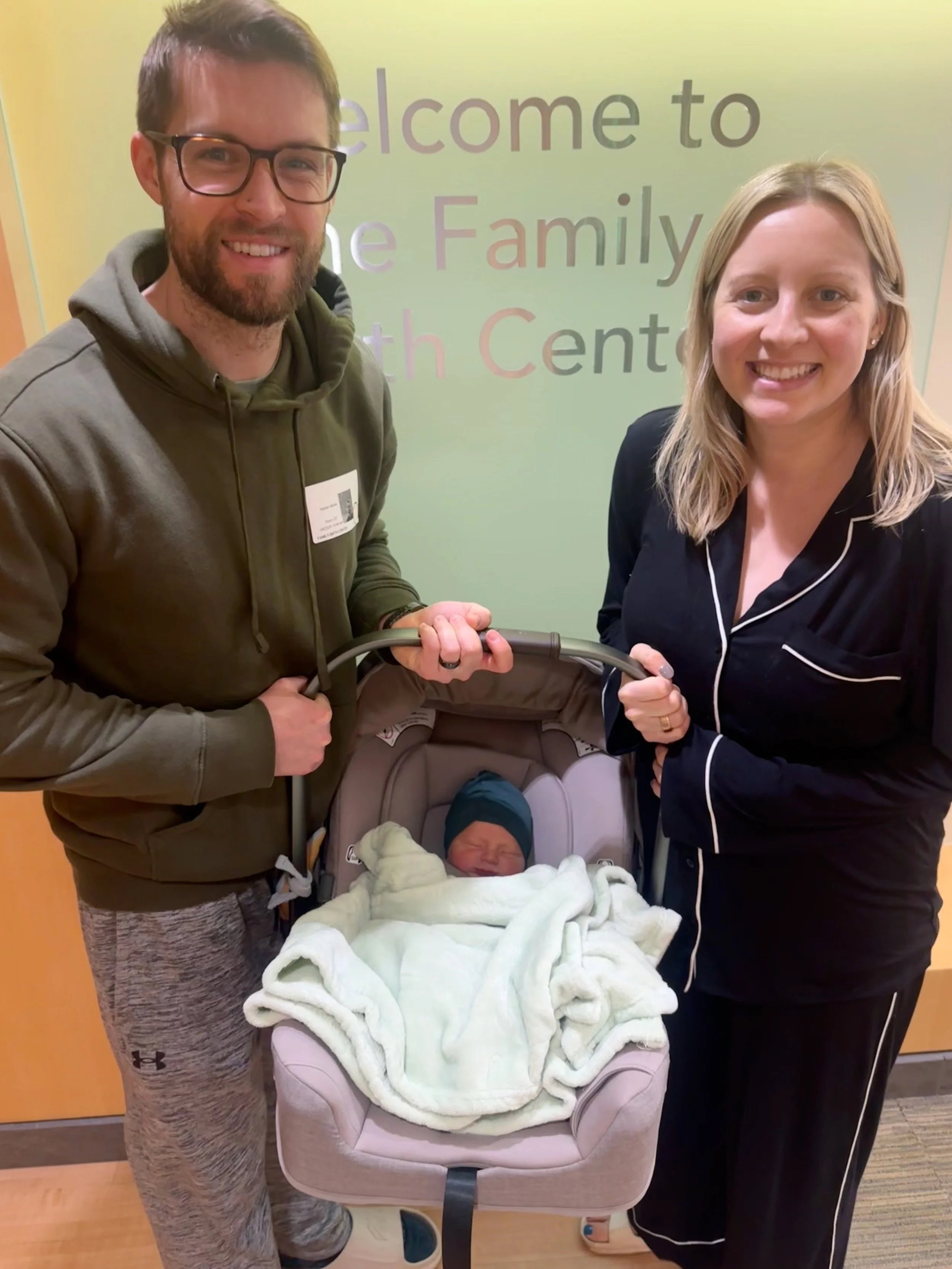
We just passed 12 weeks postpartum, and looking back, the fourth trimester was filled with hundreds of little moments that stretched me, surprised me, humbled me, challenged me, and ultimately changed me. It all began before we even left the hospital.
For the first 24 to 36 hours after birth, every time I stood up, my heart immediately started racing. I felt hot, short of breath, and my blood pressure would suddenly spike into numbers that got everyone's attention.
Apparently they take any mention of chest pain very seriously at Methodist Hospital (for good reason, I’m sure!) So I quickly found myself having an EKG, getting wheeled down to have a CT scan to rule out blood clots, and receiving more blood work than I wanted. Thankfully, every scary possibility came back negative.
The answer ended up being pretty simple actually - postpartum anemia from low iron.
While it was reassuring to have an explanation, it also meant that my introduction to motherhood began while feeling unbelievably weak and exhausted. Looking back, it's hard to separate what was normal postpartum sleep deprivation and what was anemia because they existed together. Recovering from birth already asks everything of your body, but adding anemia on top of that felt like trying to run a marathon with an empty tank.
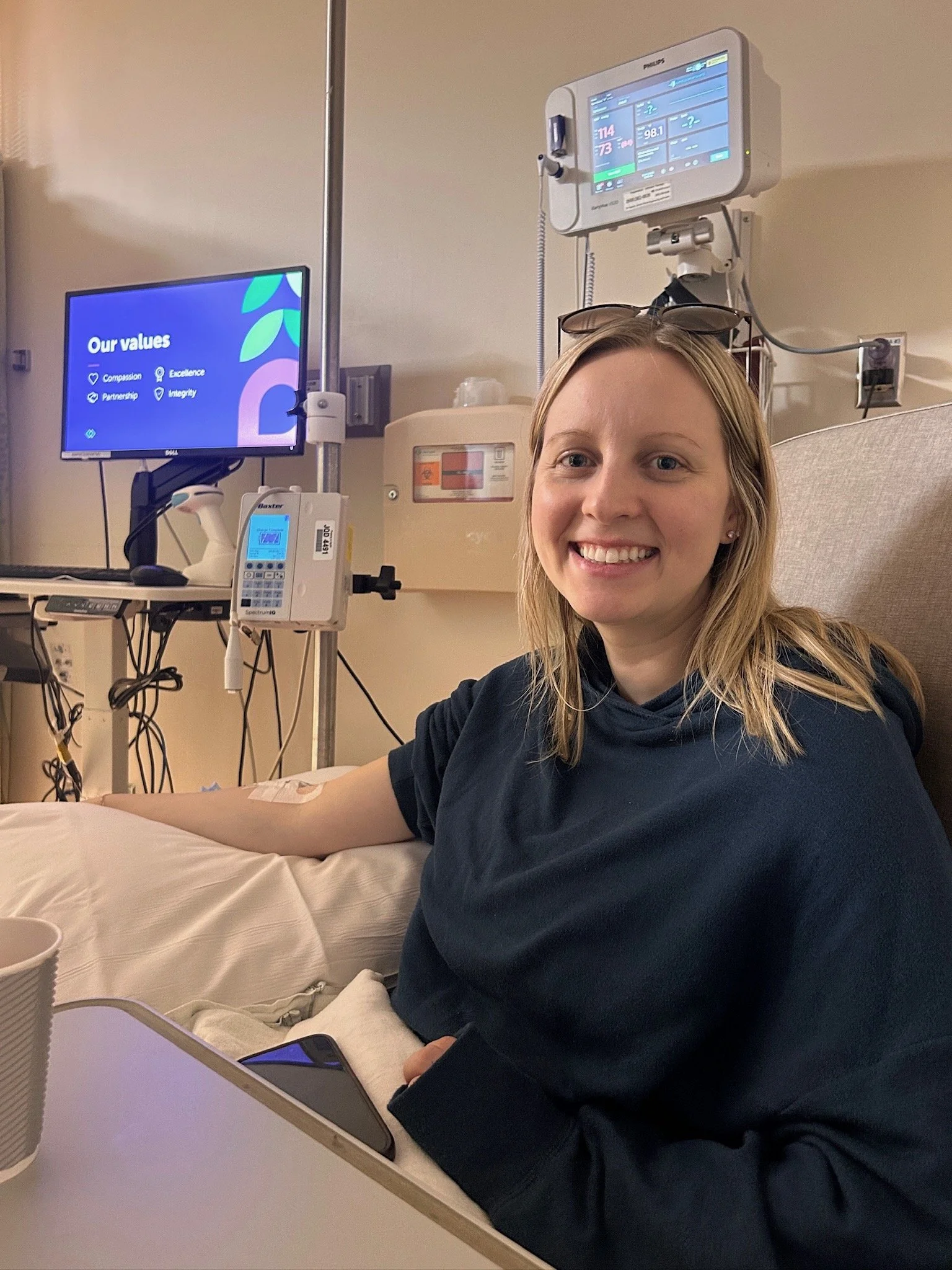
Between weeks 2 and 4, I visited an infusion center to receive IV iron. This was especially frustrating since one of my top birth preferences was to avoid an IV. I achieved that preference during birth, only to need several IVs postpartum…the universe has a funny way of humbling you. Thankfully by 6 weeks, my iron levels had returned to normal and I slowly began to feel more energy.
Those first few weeks felt like we were constantly putting out one little fire after another. Just when we thought we'd solved one problem, another would pop up.
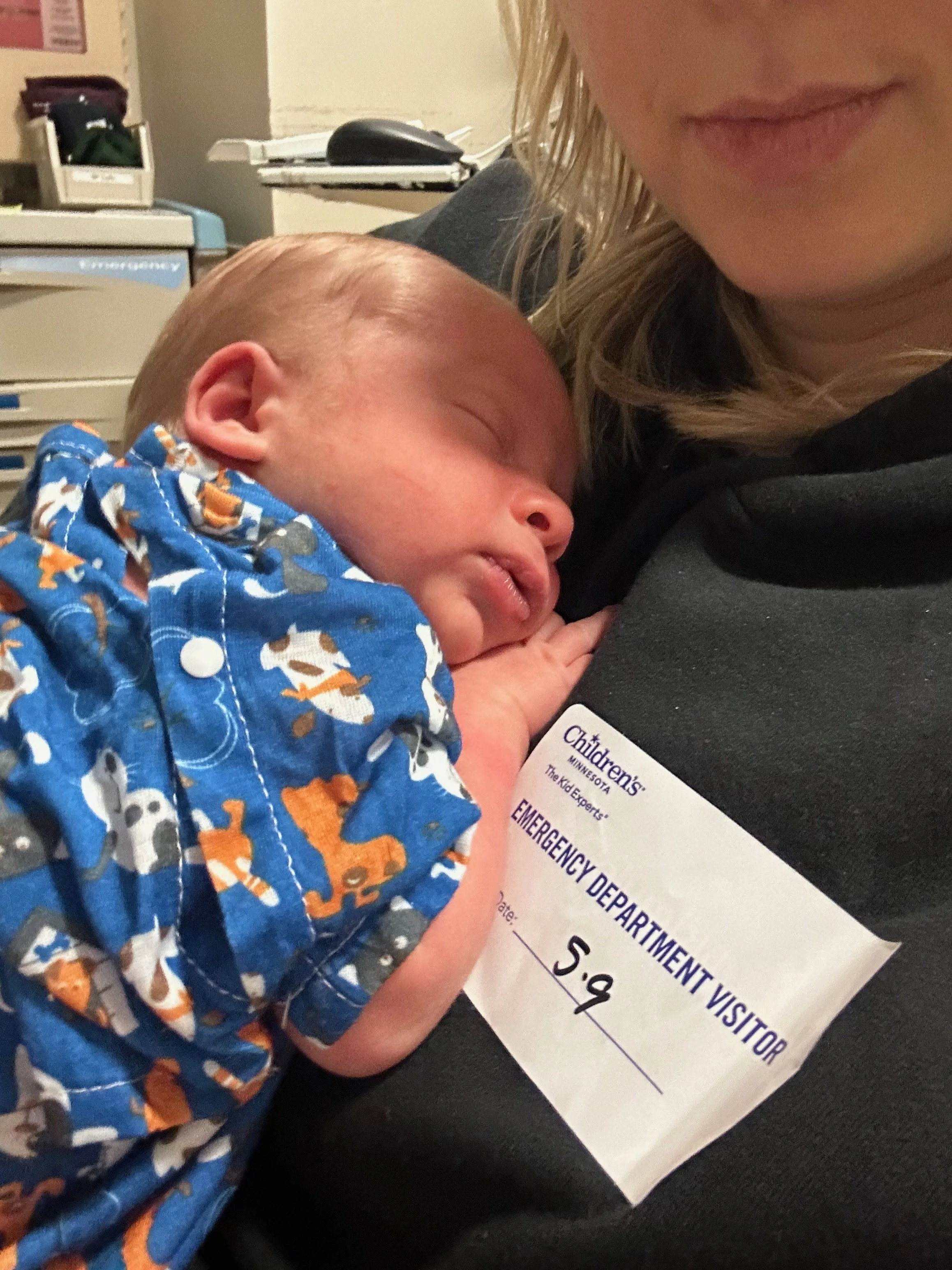
Around day 9, in the depths of sleep deprivation, we found ourselves in the emergency room at Children’s MN after noticing Lewis having episodes of labored breathing with visible retractions.
If you've ever Googled newborn breathing concerns, you know exactly how that search ends. The nurse who answered my BabyLine call was NOT reassuring whatsoever, so naturally, we were terrified.
During intake, the nurse took his temperature rectally, and within seconds, Lewis had the most impressive blowout of his young life. Poop covered the exam table, the wall, the equipment...But the [now] funny part was that after the blowout, his breathing settled, so by the time the physician came in, she couldn't observe what we'd been seeing all morning. Thankfully Nathan had taken a video that morning, so we didn’t feel like the parents who freaked out over nothing. She validated our concerns after seeing the video, thankfully.
After some x-rays and evaluation, the verdict was that our perfectly healthy baby was simply so full of gas and poop that it was limiting how freely his diaphragm could move. So yes...we paid about $600 for a physician to tell us our newborn had gas. 🙃
His breathing remained a little faster than average afterward, and our pediatrician later diagnosed him with periodic breathing, which is a newborn pattern that thankfully resolved on its own.
Lewis entered the world without a suck reflex, so breastfeeding also looked nothing like I had imagined.
We truly started at ground zero. Every feeding involved suck training, a supplemental nursing system (tiny feeding tubes alongside the breast), a nipple shield, pumping, bottles, and two very tired parents. Nathan became my teammate in every sense of the word.
For the first three weeks, we were triple feeding for every feed. If you've never heard of triple feeding, it’s a special kind of misery…First, you breastfeed. Then you pump. Then you bottle-feed the baby. The entire process takes about an hour, and by the time you burp the baby, wash the pump parts and bottles, maybe use the bathroom yourself, and grab a snack you have about 30 to 45 minutes before you start the entire process over again.
We did that around the clock….for three weeks. It was one of the hardest things I've ever done - both physically and emotionally. There were moments when I thought that quitting breastfeeding would have been the much easier choice.
What kept me going though, was the support we had. Our doulas reminded us that we weren't failing and helped celebrate every tiny victory. Then, at three weeks postpartum, we saw a lactation consultant and did another weighted feed. At that visit we learned Lewis was transferring about 3 ounces during his feeds, which was plenty for him.
I could have cried (actually...I probably did). That appointment gave us the confidence to stop triple feeding and begin trusting that breastfeeding was working.
Though I was so happy to ditch triple feeding, pivoting to exclusive nursing had challenges of it’s own including nipple pain, blisters (for both me and Lewis), clogged ducts, and him seeming to work so much harder than he should need to just to eat, etc.
We eventually tried one last thing and made an appointment with a speech therapist and PT, who assessed Lewis and diagnosed him with a tongue tie, lip tie, and two buccal (cheek) ties. This actually felt extrememely validating about why our journey had been so difficult.
Speech therapy and physical therapy visits became part of our weekly routine. Week by week, Lewis grew stronger and more coordinated. Around 8 weeks, he successfully breastfed in the cross-cradle position for the first time (prior to that he would only nurse in the football hold). To anyone else, that probably sounds like a tiny milestone, but to me, it felt enormous.
But just when I felt like we had turned a corner with feeding, postpartum reminded me that the journey isn't linear.
Around 9 weeks, Lewis received his first round of vaccinations. Like many babies, he wasn't very interested in breastfeeding for a day or two afterward. My body noticed before I did, and a clogged duct quickly became mastitis.
Nathan and I were out with friends when a wave came over me. Within minutes I turned pale, became nauseous and shakey, and barely made it outside before vomiting in the grass.
If you've had mastitis, you know it isn't just breast pain. It feels like getting hit by a semi truck and comes with several flu-like symptoms. Thankfully, I still had prescription-strength ibuprofen left from birth. It was the only thing that got me out of bed for the next couple of days while I did all the home-remedies to care for myself…while doing my best to still care for a newborn. Luckily I recovered within a few days and we were back on track.
After 4 weeks of oral-motor and physical therapy, multiple providers have now recommended a revision procedure for Lewis’s oral ties. Like so many parenting decisions, it isn’t an easy choice and it feels like there isn’t one perfectly clear answer. We’re currently still in the midst of exploring the procedure, gathering good information, leaning on trusted professionals, and making the best decision we can for Lewis. I’m learning that parenthood is full of decisions that don't come with certainty.
This experience has also changed how I think about breastfeeding support. I know every family's feeding journey is different, and breastfeeding isn't possible (or the right choice) for everyone. But I also can't help wonder how many parents stop breastfeeding not because they wanted to, but because they were left to navigate the challenges alone.
Today, 12 weeks later, Lewis and I are exclusively breastfeeding. We're still a long way from my goal, but I'm more confident than ever that we'll get there. Looking back, I'm incredibly grateful I didn't make a permanent decision during one of the hardest weeks of our journey.
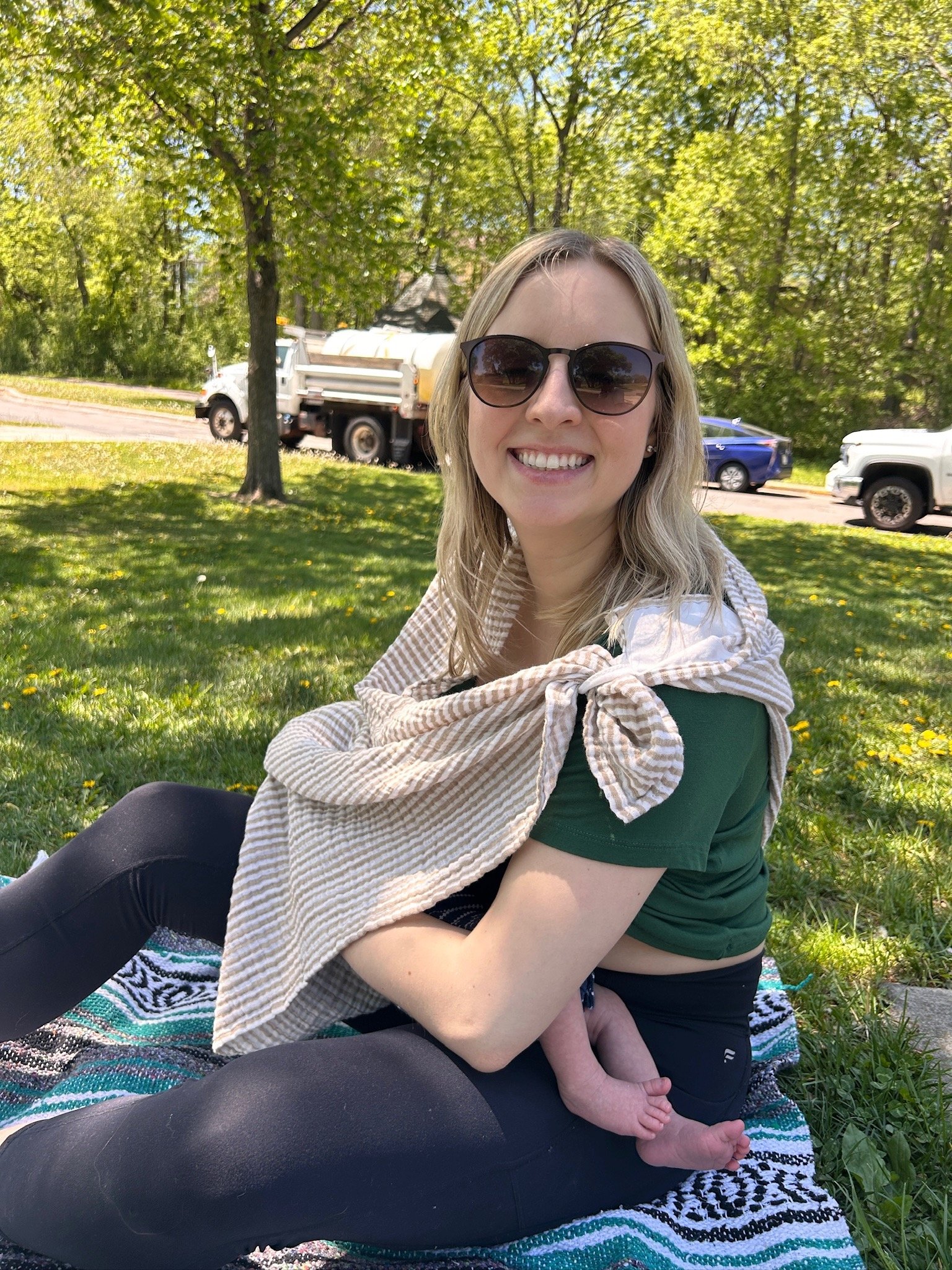
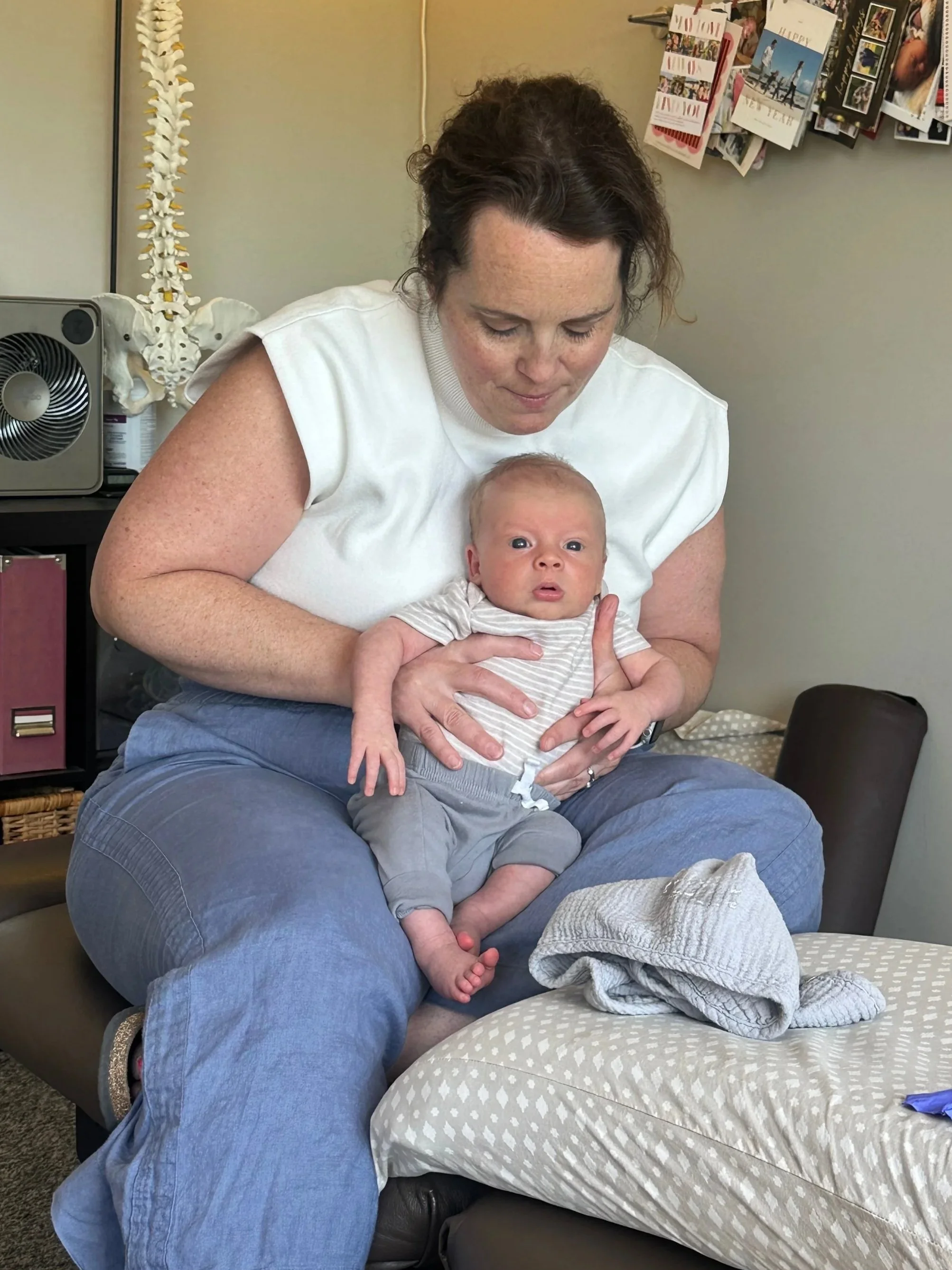
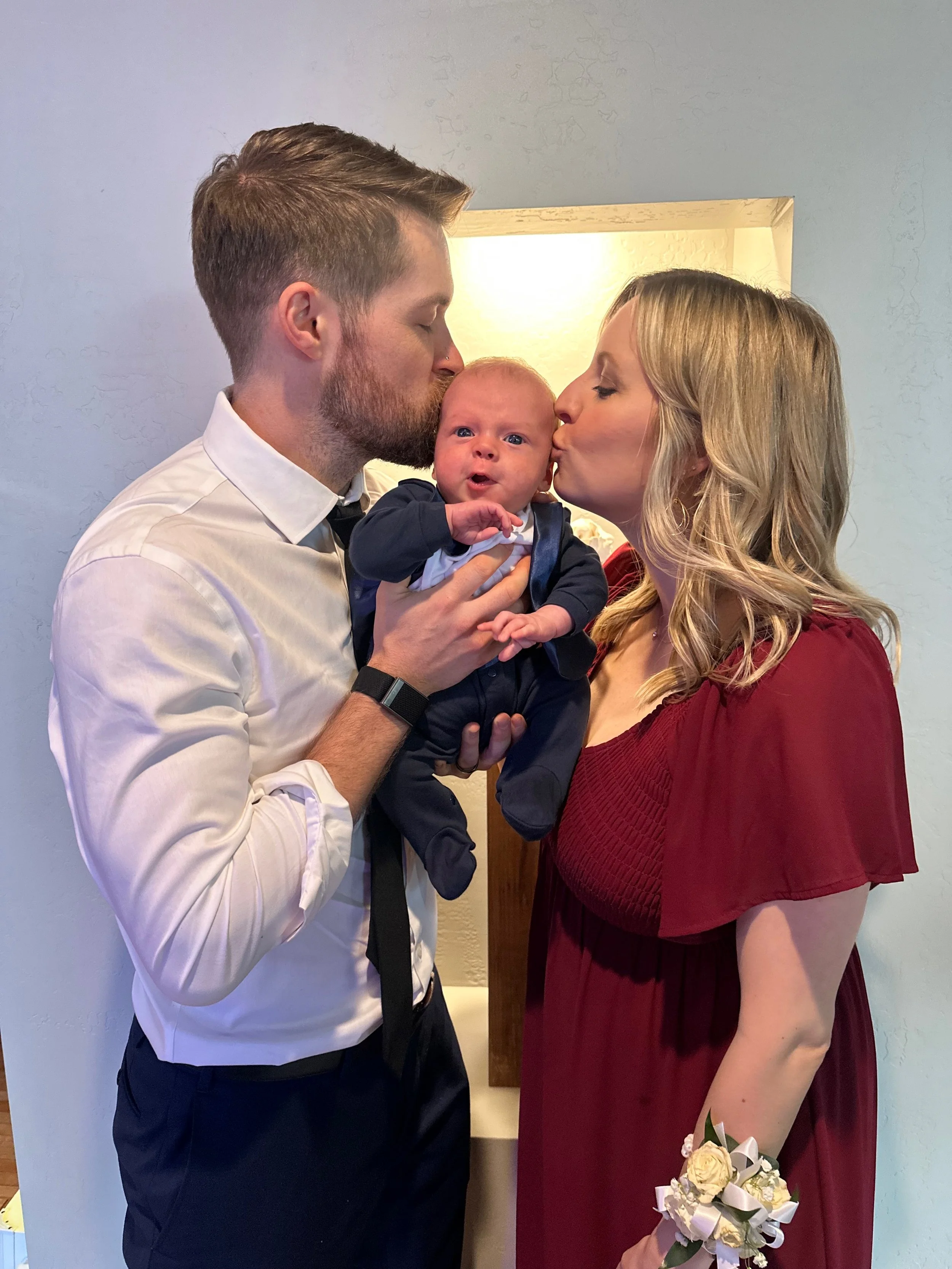
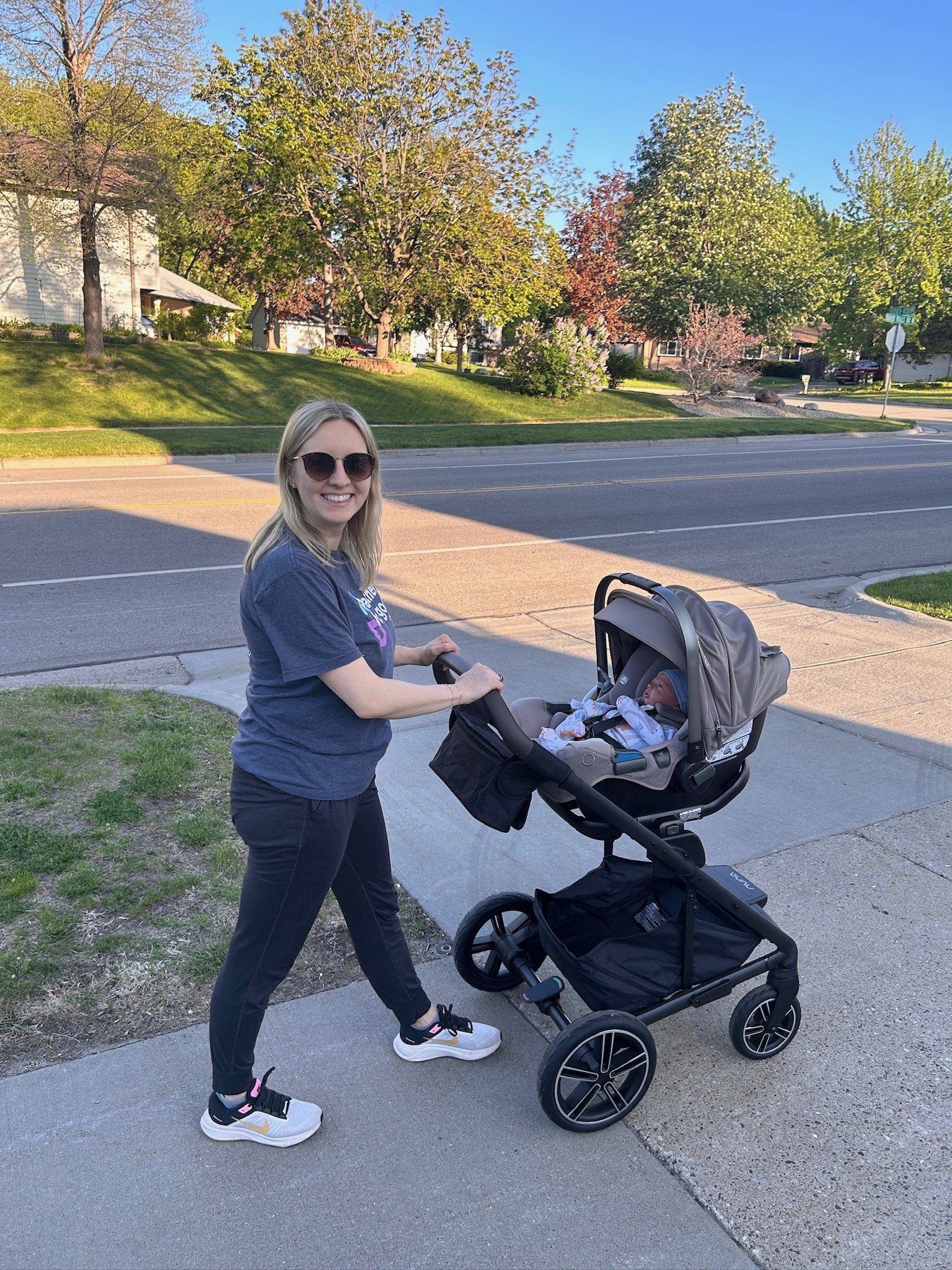
One of the biggest misconceptions about postpartum is that healing is wrapped up by the six-week checkup. In reality, our bodies continue healing and surprising us for months after birth.
Right around 6 weeks postpartum, I developed an incredibly itchy rash across my chest, arms, thighs, and back. It was eventually identified as postpartum PUPPP (Pruritic Urticarial Papules and Plaques of Pregnancy), a rare condition thought to be related to the hormonal shifts that happen after birth. The first prescription cream didn’t make much of a difference, despite using it religiously for three weeks, so now I’m trying a second treatment while also waiting to get in with a dermatologist.
From what I’ve learned, some people experience postpartum PUPPP for only a short time, while others continue dealing with it until they stop breastfeeding (After everything we’ve been through to establish nursing, I’m really hoping that isn’t our story).
I’ve also had to let go of worrying about what anyone thinks when I wear shorts and my thighs are covered in a very visible rash. In the middle of a 90-degree Minnesota summer, comfort has officially won. Apparently the universe wasn’t finished humbling me just yet.
Somewhere around 8 weeks, our days started feeling a little different.
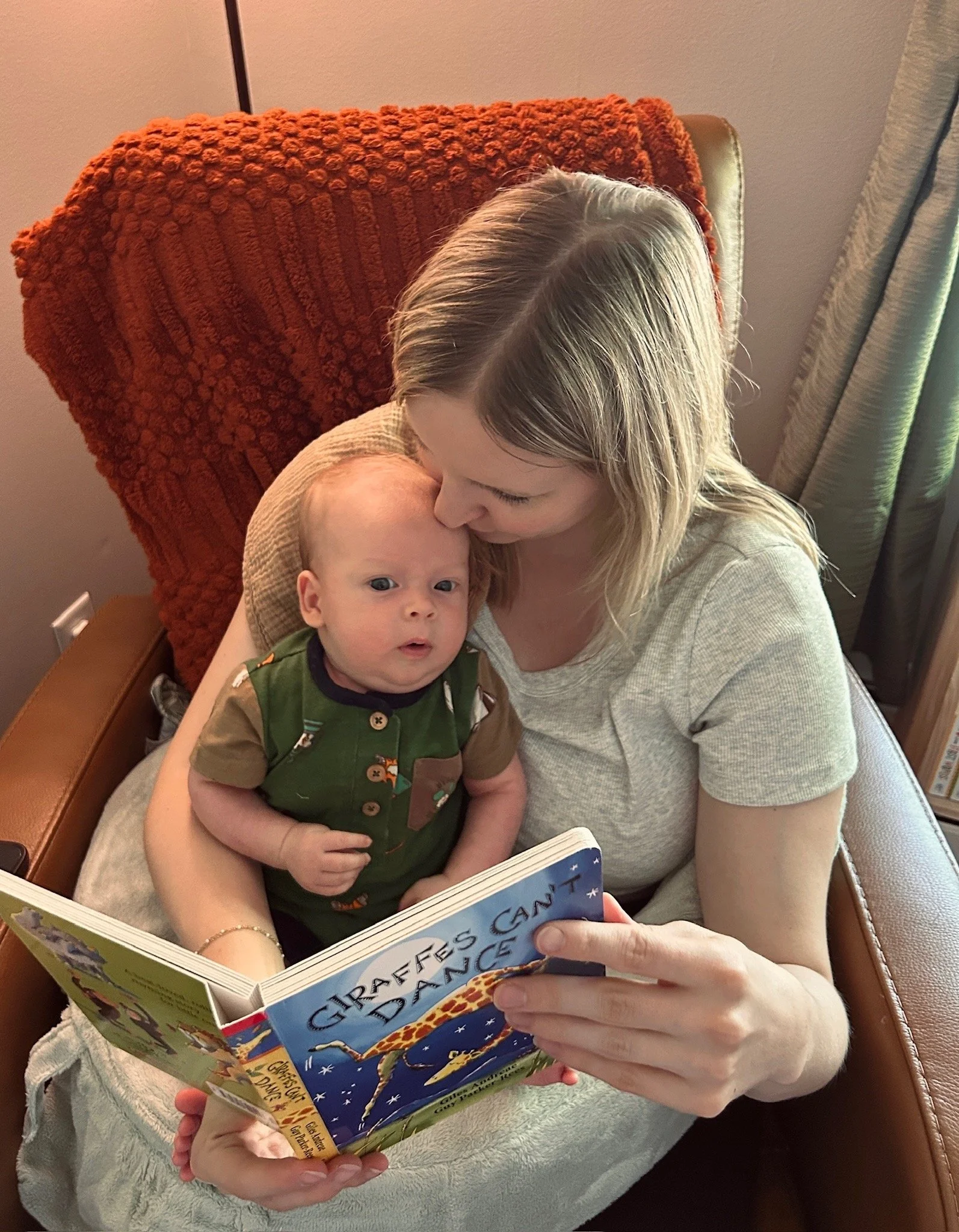
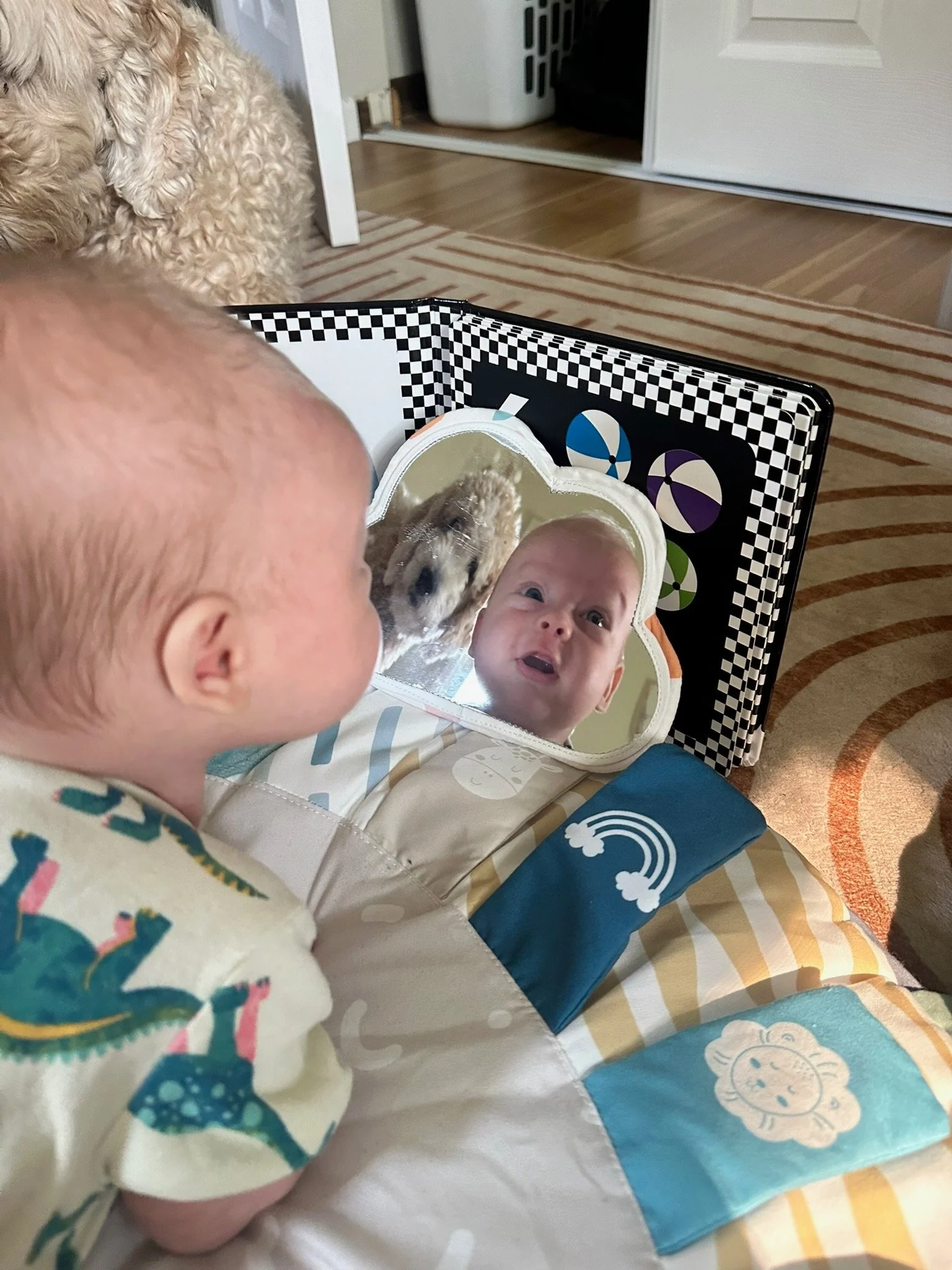
Lewis discovered smiling, and suddenly every silly face, song, and conversation became worth it. I now spend my day narrating everything we're doing, singing songs that neither of us knows all the words to, reading books far beyond his comprehension, practicing tummy time, and celebrating what feel like the smallest milestones.
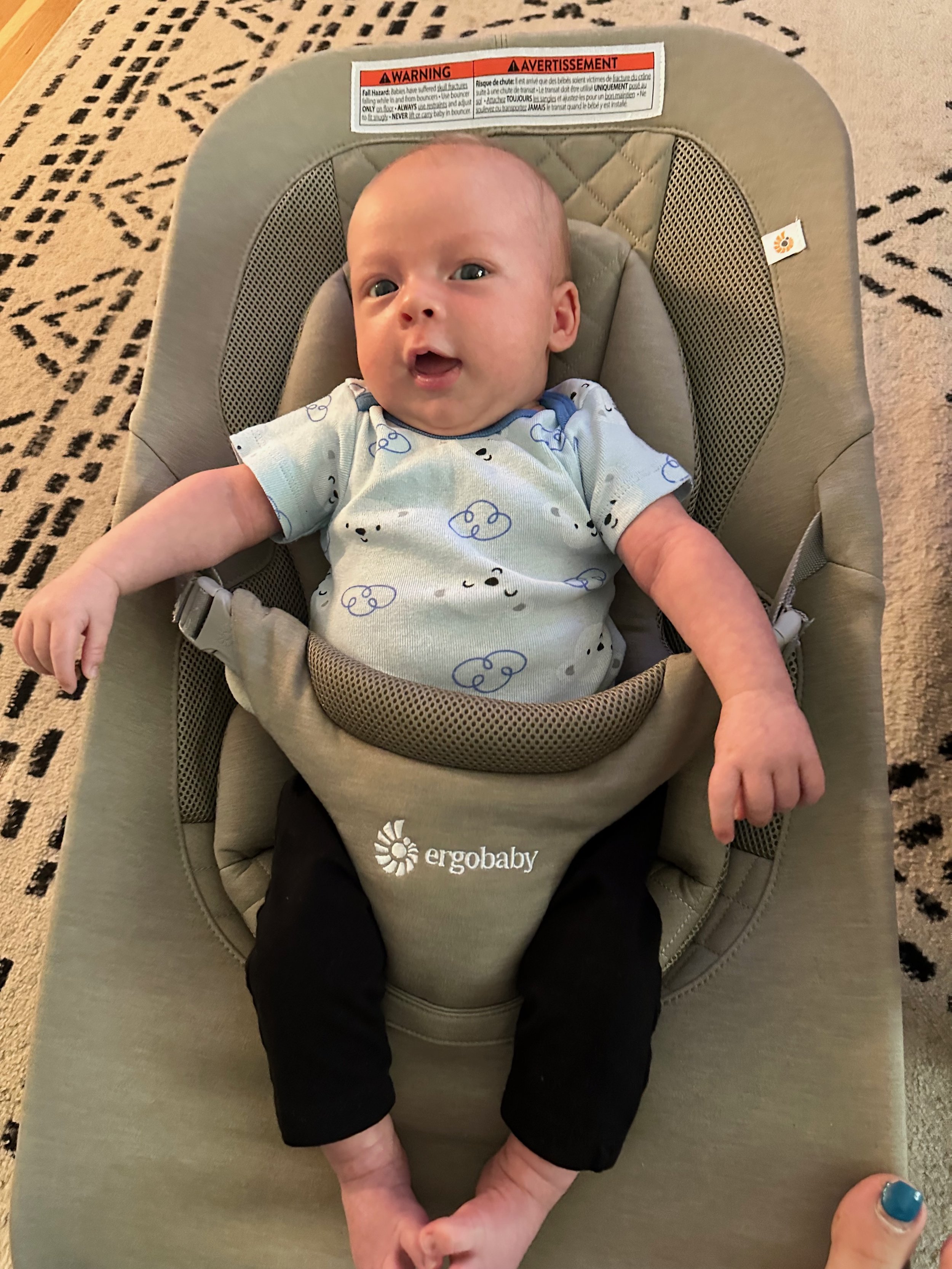
His first intentional smile. Rolling over. Finding his hands. Reaching for toys. Every week he seems to wake up with a new skill, and every week I find myself wondering where my tiny newborn went.
Watching him discover the world has been one of the greatest joys of becoming his mom.
One piece of advice new parents hear over and over again is, "sleep when the baby sleeps." It's well-intentioned advice, but it only works if your baby actually sleeps somewhere besides you.
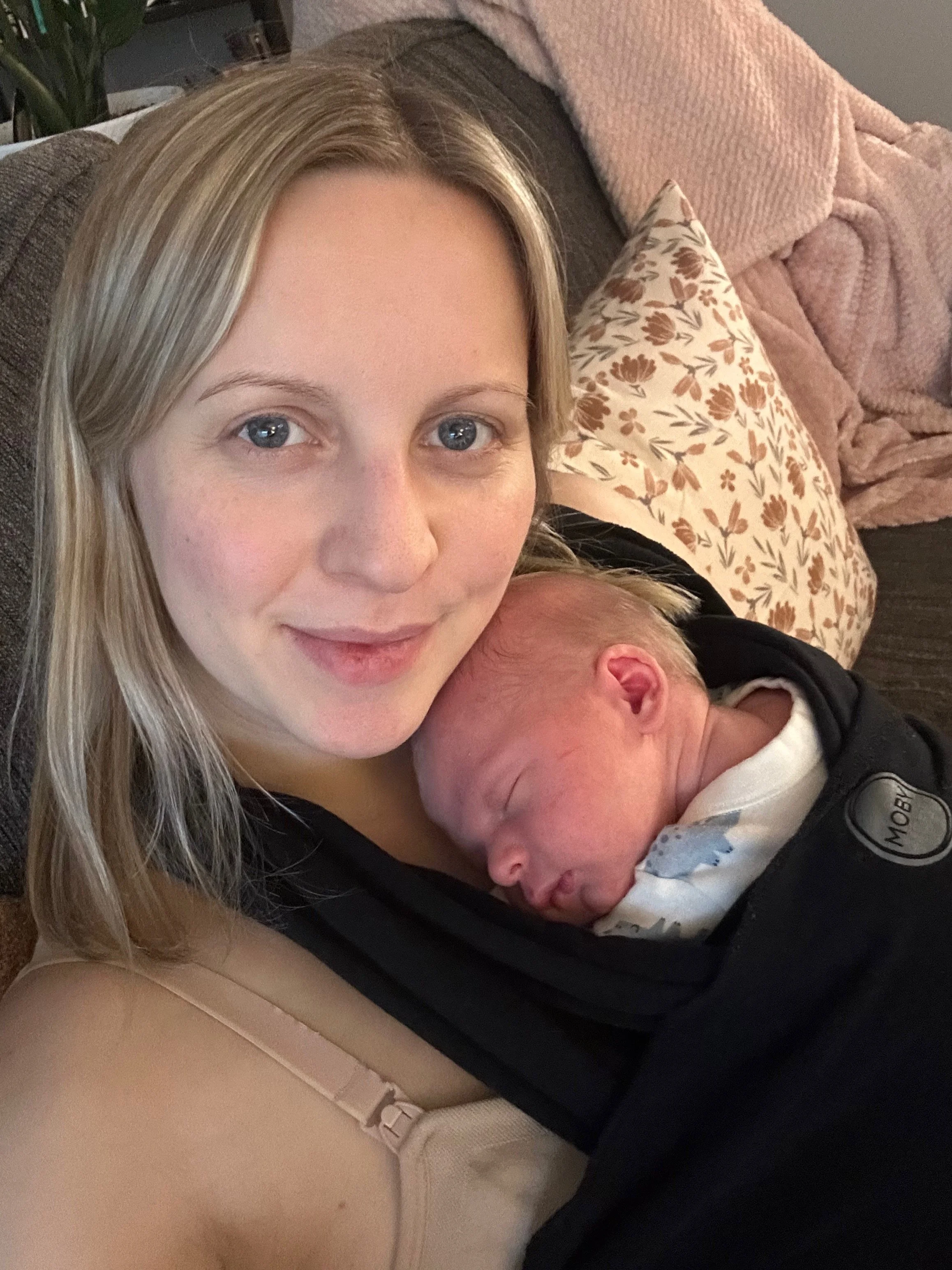
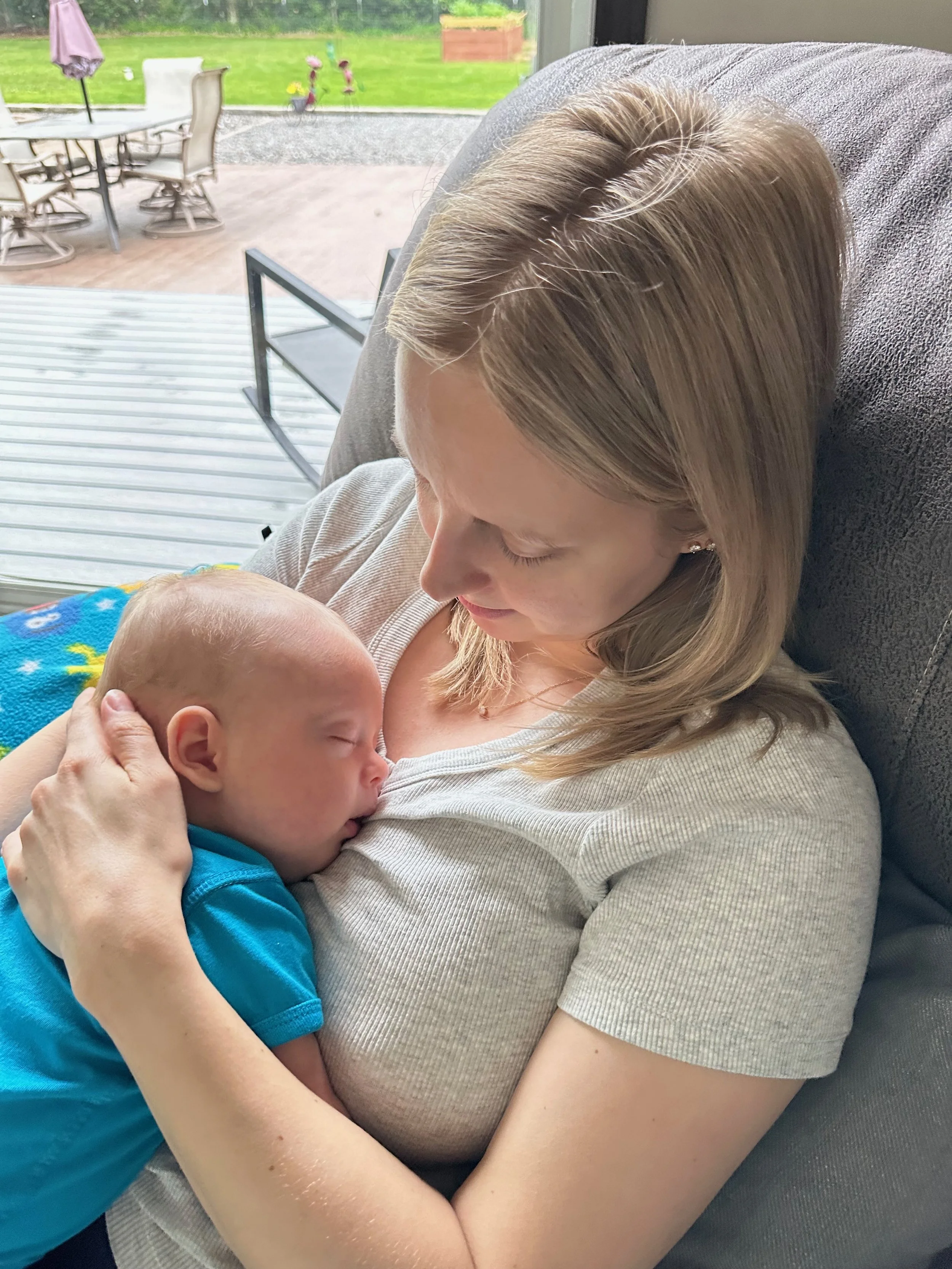
Lewis loved contact naps from the very beginning and would only nap during the daytime if he was being held or we were babywearing. I know I'll miss the sleepy snuggles someday, but that also means that daytime naps for me rarely happen.
I spent much of my adult life measuring productivity by what I accomplished, but motherhood has been teaching me that sometimes the most important thing I accomplish all day is being the safe place where my son gets his best sleep.
My social media accounts are also now filled with ads for every sleep training device or program out there. I know there are several opinions on “sleep training,” but Nathan and I have decided that our approach is to follow Lewis’s lead and support him to sleep in whatever way he needs.
Over the 4th of July weekend, Lewis slept through the night for the very first time...for 9 glorious hours! Of course it happened while we were traveling and staying at my parents’ house. He wasn’t in his usual sleep space, his swaddle wasn’t available because our dog Lady had chewed it up that morning, and our travel sound machine died sometime during the night. 😆
So basically none of the carefully planned sleep conditions I had convinced myself were absolutely essential actually existed that night. And yet, he slept for 9 hours! As someone who appreciates routines and research (and maybe likes controlling variables just a little), I had to laugh. Maybe "winging it" deserves more credit than I give it.
Since then, Lewis has slept through the night several more times, and even when it’s not a full 8-9 hours, he regularly sleeps for 5-6 hours overnight, and that truly feels amazing!
Just this week, Lewis also starting taking full naps in his crib. After months of contact naps, watching him peacefully sleep in his own space feels both exciting and bittersweet. Nonetheless, these sleep milestones have validated the supportive approach we are taking towards infant sleep. We still do several contact naps throughout the day and follow his cues to support his sleep, all of which I strongly believe has allowed him to feel safe to sleep on his own when he wants to, and the reason we aren’t struggling with sleep (though I fully know that can change any time!)
If there's one thing these past twelve weeks have reinforced, it's that we were never meant to do postpartum alone.
Our postpartum doula has been an absolute gift. Friends and family organized a meal train, and that, combined with freezer meals we prepared before birth, meant we basically didn't need to cook or meal prep ourselves for nearly 10 weeks!
Through the last few months, we’ve relied on grocery delivery, house cleaners, lactation support, therapists, medical providers, grandparents, friends, and paid parental leave for both of us.
Those supports didn't necessarily make postpartum easy, but they did give us the space to focus on healing, learning how to breastfeed, soaking in newborn snuggles, and simply becoming a family.
I recognize that many of these supports are privileges, and I don't take them lightly. I am deeply grateful for every person and every service that helped carry us through these first months. This experience has strengthened my belief that every family deserves support after bringing home a baby. No one should have to navigate this season alone.
For years, I've had the privilege of walking alongside families as a doula during their postpartum journeys. I thought I understood how vulnerable those early weeks could be. Then I became the mom, and while this experience hasn't replaced what I learned professionally, it has deepened it in ways I never could have imagined.
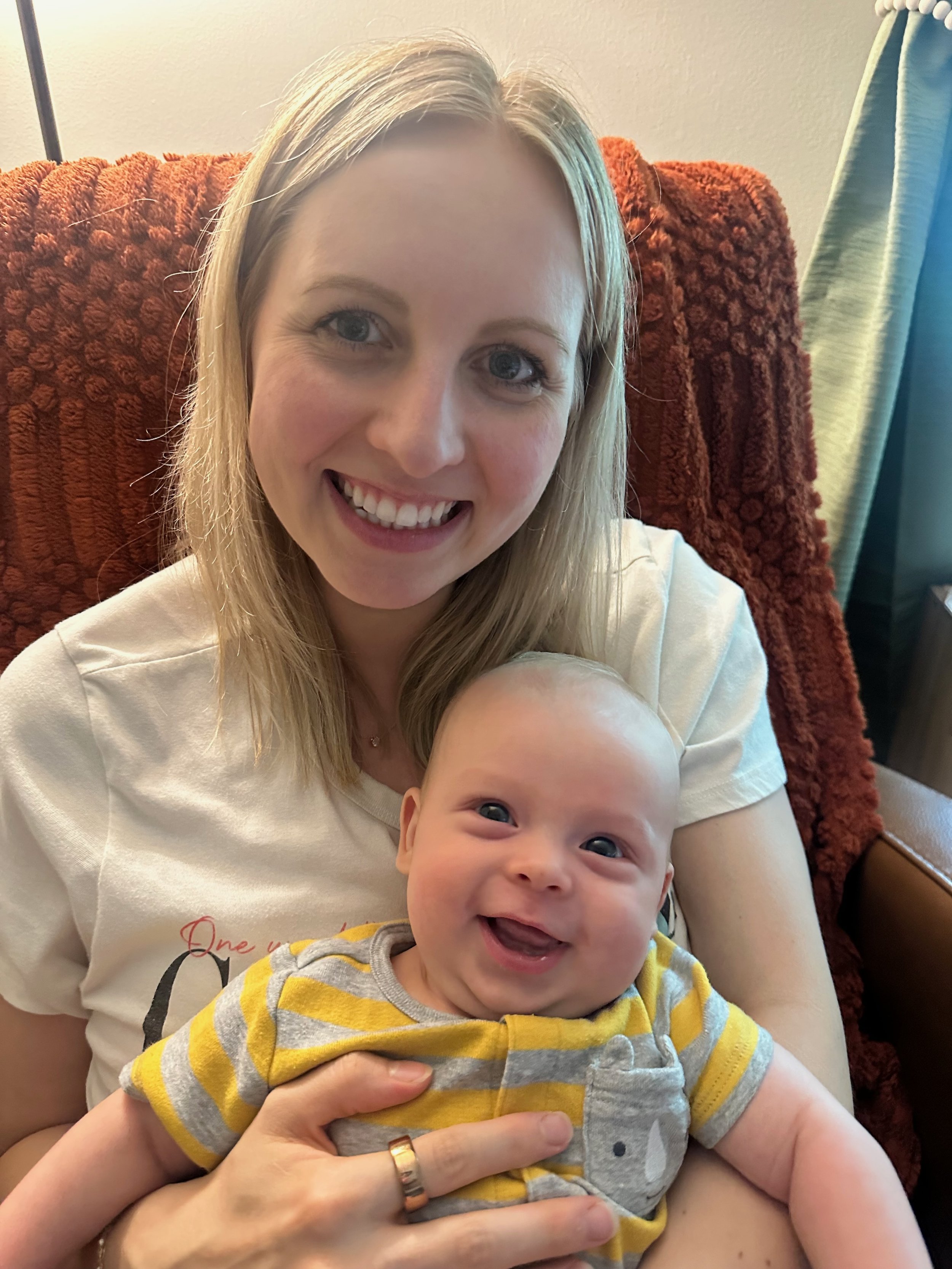
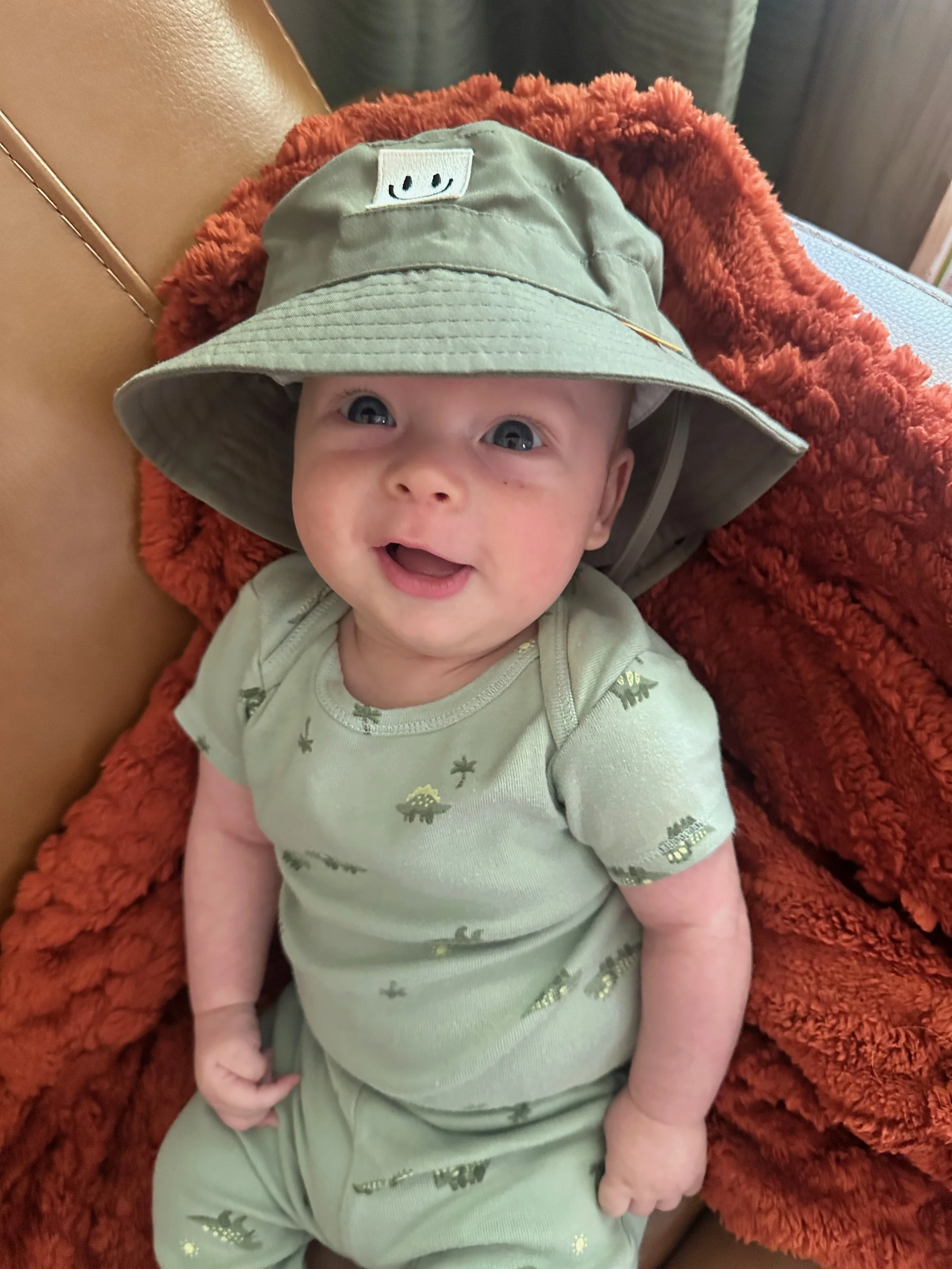
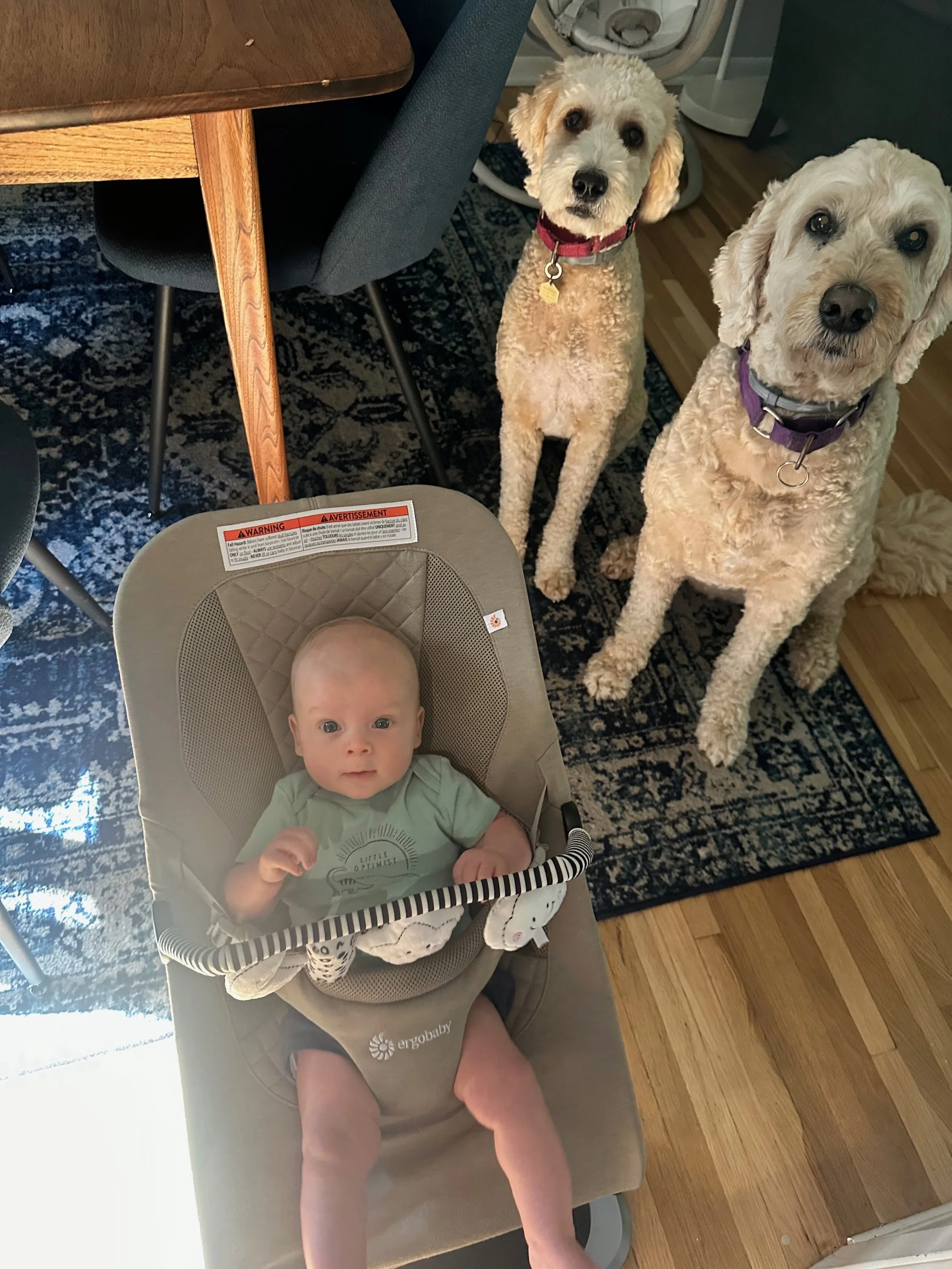
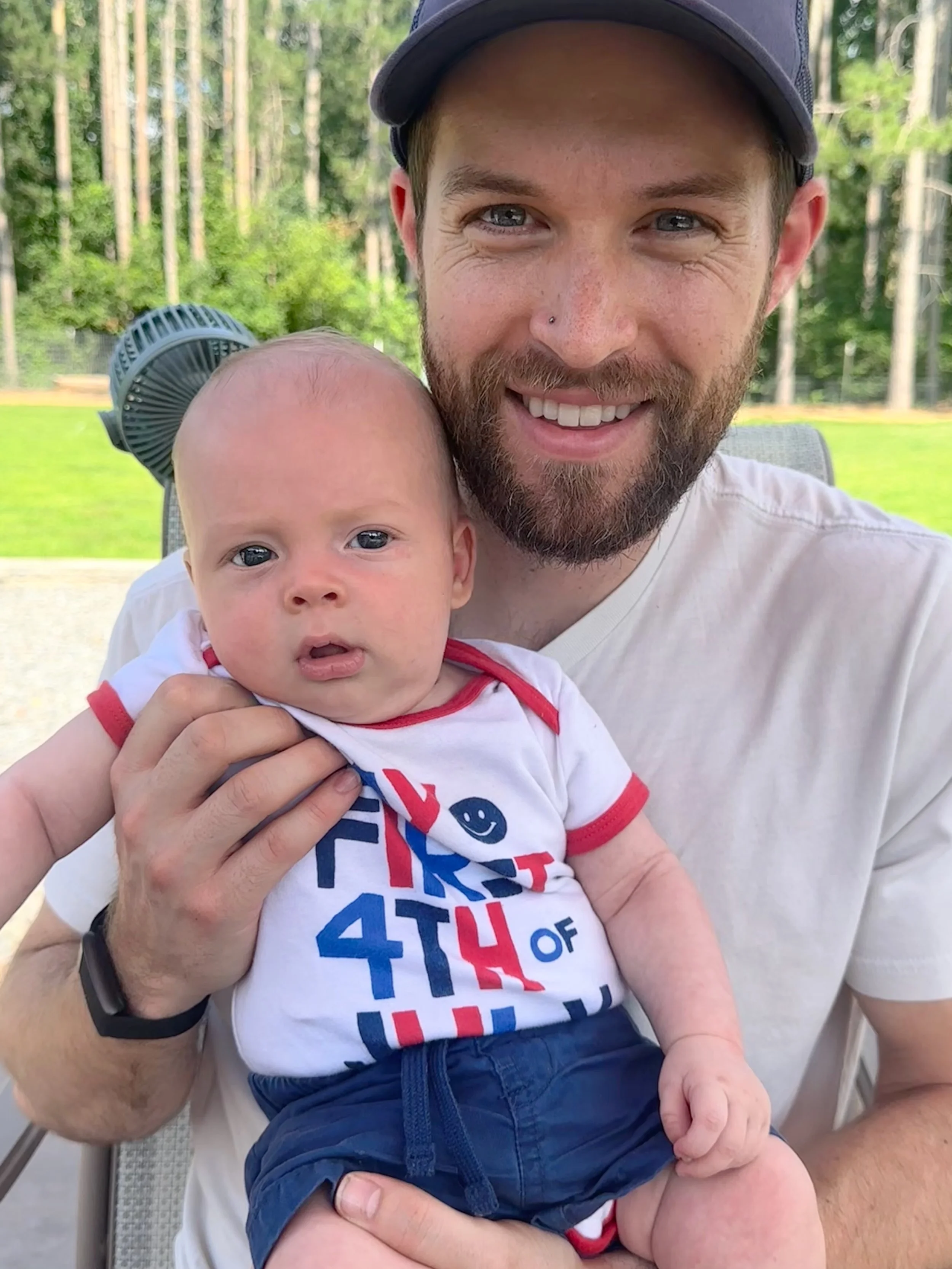
Despite all the twists and turns of our 4th trimester, the biggest surprise to me has been realizing that motherhood isn’t something that happens overnight with the birth of a child. It unfolds slowly, quietly and beautifully in the moments we often don’t think to remember.
There isn’t one magical moment when I suddenly felt like I knew what I was doing. I’ve noticed that my confidence as a mom started growing little by little - one feeding, one difficult decision, one contact nap, one newborn smile, one tiny victory at a time.
If I could go back and tell my newly postpartum self one thing, it would be:
You don't have to have it all figured out. The breastfeeding will get easier. You'll sleep again. Your body will heal, even if it takes longer than you expected. You'll make hard decisions and, even without certainty, you'll make the best ones you can. One day, you'll realize that the tiny newborn who feels so unfamiliar will become the person who knows your voice best, and you'll find yourself completely in love with his smile.
He won't remember the triple feedings, the therapy appointments, the sleepless nights, or the countless hours we spent learning how to breastfeed together. But I will. And I’ll never forget how it changed me.
I spent so much of pregnancy preparing to meet Lewis. What I couldn't have prepared for was how much the 4th trimester would stretch me in ways I never expected, humble me more times than I can count, and give me more joy than I knew was possible.
Twelve weeks ago, Lewis entered our world. Since then, he's been learning how to smile, roll over, nap in his crib, and experience the world around him. At the same time, I've been learning how to nourish him, comfort him, ask for help, trust myself, and love him in ways I couldn't have imagined before he arrived.
While Lewis has been learning and growing into himself, I have been evolving and growing into the mom he needs me to be.